top of page

Optimal delivery of actives on target plants and pests is an important part of agriculture. In addition to developing the ideal formulation for your actives, the operating conditions encountered from manufacturing to the field are complex. Storage conditions, seasonal environmental variation, tank mixing with other products and even application equipment can challenge your formulation and potentially lower the efficacy of the active. Let us take the guess-work out for developing the perfect formulation for your actives. If you have an ongoing or future product development project or an existing product that needs a formulation facelift, please reach out to us.
Below are some of the formulation types we have expertise in

SUSPENSION CONCENTRATES (SC)
Suspension Concentrates are a prefered formulation system for solid actives that are insoluble in water. Most actives that were historically applied as a dry powder are being re-formulated into SC to reduce dust and potential health/environmental concerns. As the name suggests, SCs have micron size particles of the actives suspended in a stable formulation. The biggest challenges SCs encounter is the settling of suspended solids over time and difficulty to resuspend it back into solution. With the help of the correct formulating aids, SCs can be developed with high solids loading (We managed 72% solids) to improve application (seed and fertilizer coatings) and optimize inventory management for customers.
Solutions
Aqueous solutions are one of the most common formulations employed in agriculture. Aqueous solutions are made by completely solubilizing the actives in water. The resulting mixture is a transparent product sometimes colored depending upon the active. Care should be taken to not supersaturate the solution which could result in salting-out in storage. Depending upon the actives, improved solubility can be achieved with aids such as chelators/sequestrants or polymeric dispersants.

Oil Dispersions (OD)
Oil dispersions (OD) are a favored formulation type for actives that are sensitive to water and/or typically have hydrophobic characteristics. Unlike EC, ODs are employed with actives that are not soluble in oil. ODs are a great vehicle for delivery of microbes and as such great care must be taken to select formulation aids so as to not negatively impact the viability of the microbes. ODs can be cost effective with use of low-cost vegetables oils such as corn, soy or sunflower oil. Typical issues with ODs are similar to ECs such as sedimentation, coalescence, and creaming.
Water Dispersible Granules (WDG) and Wettable Powders (WP)
WDG & WP are effective ways to deliver actives directly on target or into a pre-mix tank for application. The benefits of using WDG/WP are the high density of actives that can be loaded for improved delivery and inventory management. WGP/WP can have issues with hygroscopicity and caking in storage which could render them ineffective. Also fast dispersibility, non-clumping behavior and rapid dissolution when diluted should be the key features for a good formulation. WDG/WP are excellent delivery mechanisms for combining otherwise incompatible actives.
Emulsifiable Concentrates (EC)
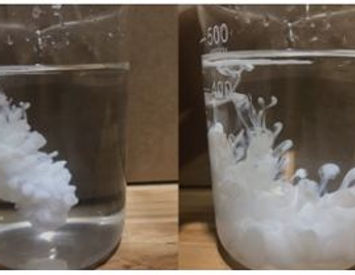
Emulsifiable Concentrates are the favored formulation system for several pesticides in the market. ECs form a stable emulsion almost instantaneously when diluted with water as tank mix. ECs are preferred for their ease of handling, manufacturing, and actives’ stability over its shelf life. Some of the issues with ECs such as actives’ crystallization, emulsifier seeping, etc. not understood until after storage. Creaming or Coalescence in the tank mix due to incompatibility with other products is often an issue. Without proper development and testing, reformulating can end up spending time and resources.
Aqueous Emulsions (EW)
Aqueous Emulsions are a close relative of ECs, however are considered relatively safer and environmentally benign. In EW, water forms the continuous phase and the actives dissolved in a water immiscible liquid are emulsified into micro or nano droplets that are stabilized with an optimal combination of excipients.

Microencapsulation
Formulations development can go beyond delivery of actives and can sometimes be primarily focused on protecting actives and maintain its efficacy until delivery and uptake. Trichoderma compatibility with any tank-mix fungicide, Rhizobia compatibility with seed applied molybdenum and RNAi technology all require an advance level of formulation development to be efficacious in their life-cycle. We have developed W/O/W emulsion to encapsulate actives and protect them during storage and application.
bottom of page